Types of Game Trailers Explained
From first announcement to launch week, games use different trailer types to do different jobs. Here's what cinematic, announcement, gameplay, and story trailers are each for, and when to use them.
Why game trailer type matters
A game trailer has one job at a time, not several. A trailer trying to announce a title, sell its mechanics, and set up its story all at once usually does all three badly. Publishers and developers that get the most out of a marketing campaign tend to treat trailer type as a deliberate choice tied to a specific moment in the development and release cycle, not a single asset reused across every milestone.
This matters for planning as much as for creative. Each trailer type draws on different source material - some can be built from existing capture, others require bespoke animation from scratch - which has a direct effect on budget and lead time. Understanding the type you need before briefing a studio saves time on both sides.
The four types of game trailers
Most game marketing campaigns are built from four core trailer types, often released in sequence over the course of a development cycle.
1. Announcement trailers
An announcement trailer (also called a reveal or teaser trailer - the terms are used fairly interchangeably across the industry) is the first public statement that a game exists. Its only job is to generate awareness and set a tone. Announcement trailers rarely show confirmed gameplay, since mechanics are often still in flux this early. Instead they lean on atmosphere, world, and a strong hook.
Elden Ring's original reveal trailer is a good example of the form: almost entirely tonal, no UI, no combat system shown, and still enough to generate years of anticipation. The trailer's job wasn't to explain the game. It was to make people want to know more.
Elden Ring - Announcement Trailer | E3 2019
2. Cinematic trailers
Cinematic trailers use pre-rendered or heavily produced footage - built in-engine or through dedicated animation - to tell a short, self-contained story or set emotional tone. They don't claim to represent gameplay and usually aren't expected to. Cinematic trailers can appear at any stage of a campaign: as an announcement, as a mid-campaign beat, or even as an in-game opening cinematic repurposed for marketing.
This is the category where animation studios do the most bespoke creative work, since cinematic trailers are built rather than captured. Character performance, lighting, and pacing carry the same weight here as they would in a short film.
3. Gameplay trailers
Gameplay trailers show real, in-engine footage of how a game actually plays - UI, combat systems, movement, mechanics. These are aimed at a more committed audience: press, dedicated communities, and platforms like YouTube and Twitch where viewers actively want proof of substance over tone.
Cyberpunk 2077's gameplay demos are a well-known example of this approach: long-form, systems-focused footage designed to answer specific questions about how the game handles combat, dialogue, and exploration, rather than to generate broad awareness.
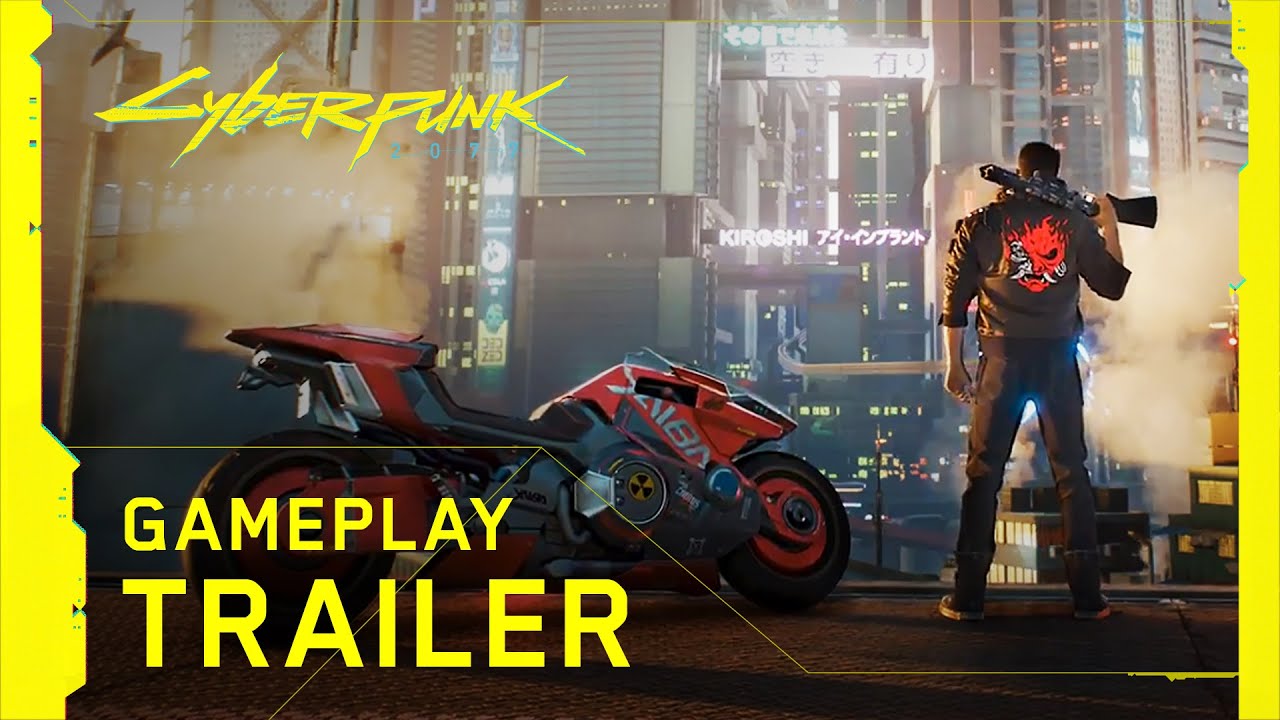
Cyberpunk 2077 - Official Gameplay Trailer
Gameplay trailers typically need less bespoke animation and more editing, motion graphics for UI overlays, and sound design layered onto existing capture.
4. Story trailers
Story trailers arrive close to launch and focus on narrative stakes, character, and plot momentum without giving away major beats. Their job is conversion - turning existing awareness into pre-orders and wishlist activity in the final weeks before release. They tend to blend cinematic sequences with brief gameplay beats, weighted toward emotional pacing over information.
Trailer types compared
| Type | Primary goal | Typical campaign timing | Shows real gameplay | Animation-heavy |
|---|---|---|---|---|
| Announcement | Generate initial awareness | 12+ months before launch | Rarely | Often |
| Cinematic | Set tone and emotion | Any stage | No | Yes |
| Gameplay | Demonstrate mechanics and systems | 3-9 months before launch | Yes | Rarely |
| Story | Convert awareness to pre-orders | 4-8 weeks before launch | Partially | Mixed |
Production timelines and cost vary considerably across these four types, largely because of how much bespoke animation each one requires versus how much can be built from existing capture. Our game trailer cost guide breaks this down in detail by type and length.
Choosing the right type for your campaign stage
Early development, nothing playable yet
An announcement trailer is almost always the right call. Lean on tone, world, and a strong hook rather than trying to show systems that aren't locked yet.
Core mechanics are playable and stable
This is the window for a gameplay trailer. Waiting until systems are genuinely representative avoids the common mistake of showing footage that changes significantly before launch.
Need to justify a price point or platform reveal
Cinematic trailers carry the most weight here, since production values signal budget and ambition even when gameplay isn't the focus of the moment.
Final weeks before launch
A story trailer, or a hybrid of story and gameplay, is the standard choice. This is the point in a campaign where conversion matters more than awareness.
Common mistakes when mixing trailer types
Most trailer campaigns that underperform aren't let down by production quality. They're let down by using the wrong type at the wrong moment, or trying to make one trailer do a job that needs two.
- Releasing a gameplay trailer before mechanics are locked, then having to walk back features that changed
- Using a cinematic trailer as the only marketing asset, leaving no gameplay proof for audiences who want it
- Packing an announcement trailer with plot detail that belongs in a story trailer closer to launch
- Presenting pre-rendered cinematic footage as gameplay without clear labelling, which damages trust with audiences and press
- Treating trailer production as one job rather than budgeting separately for the animation-heavy and capture-based types across a campaign
Hocus Pocus Studio is a BAFTA-nominated animation studio based in London and New York, producing cinematic and animated game trailers for developers and publishers worldwide.
View game trailer workFrequently asked questions
What are the main types of game trailers?
The four main types are cinematic trailers, announcement trailers, gameplay trailers, and story trailers. Cinematic trailers use pre-rendered footage to set tone and emotion. Announcement trailers introduce a title publicly for the first time. Gameplay trailers show real in-engine footage of mechanics and features. Story trailers focus on narrative and character close to launch.
What is the difference between an announcement trailer and a reveal trailer?
There isn't a meaningful difference. Announcement trailer, reveal trailer, and teaser trailer are largely used interchangeably across the industry to describe the first public trailer for a title. All three refer to the same function: introducing a game to the public before gameplay details are confirmed.
Do game trailers need to show real gameplay footage?
No, and not all trailers claim to. Cinematic and announcement trailers are often pre-rendered or in-engine cinematics rather than direct gameplay capture, and this is standard practice. Problems arise when a trailer is presented as gameplay when it isn't. Regulatory and platform guidelines in several markets now require clearer labelling of pre-rendered versus captured gameplay footage.
When should each type of game trailer be used in a marketing campaign?
Announcement trailers come first, often a year or more before launch, to generate initial awareness. Gameplay trailers follow once mechanics are locked, usually 3-9 months before release, aimed at press and dedicated audiences. Story trailers arrive close to launch, typically in the final 4-8 weeks, and are aimed at converting awareness into pre-orders. Cinematic trailers can appear at any of these stages depending on the tone a publisher wants to set.
How long does it take to produce a game trailer?
Production time depends heavily on trailer type and animation approach. A straightforward gameplay edit using existing capture can take 2-4 weeks. A fully animated cinematic trailer with custom assets typically takes 8-16 weeks. Timelines and cost are covered in detail in our game trailer cost guide.